


🎧 Listen to article read by Nicoletta:
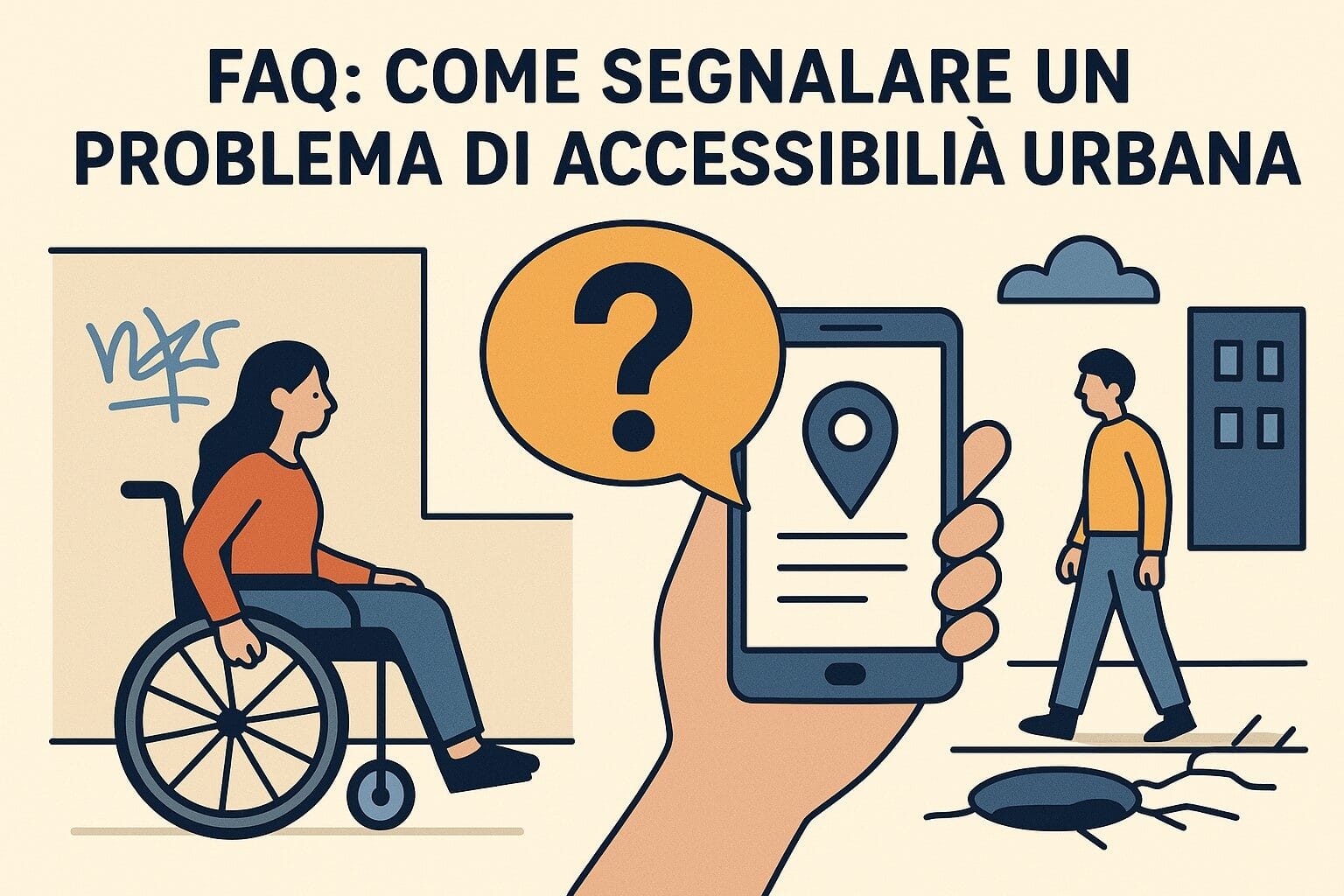
1. What is a problem of urban accessibility?
A problem urban accessibility is any obstacle that prevents or limits the use of public spaces da parte di:
- persons with disabilities,
- anziani,
- genitori con passeggini
- chiunque abbia difficoltà motorie, sensoriali o cognitive.
Esempi di barriere architettoniche in città:
- marciapiedi senza scivoli o con gradini;
- rampe troppo ripide;
- parcheggi riservati occupati abusivamente;
- attraversamenti pedonali without segnaletica tattile or semafori sonori;
- architectural barriers negli edifici pubblici.
2. Who can report an accessibility issue?
- Chiunque può fare una segnalazione:
- cittadini,
- associazioni,
- comitati di quartiere,
- turisti,
- scuole,
- enti privati.
- The signaling is a right and contributes to the improvement of the city.
3. To who should we contact?
Depends on the type of problem:
- Municipality: for sidewalks, roads, signage, and public buildings.
- Municipal Police: for reserved parking spaces are occupied, obstacles and temporary violations of the Code of the Road.
- The company of the local transport: for problems on buses, tram, metro.
- The ASL or the municipal technical Office: barriers in health care facilities or schools.
4. How can I send the report?
- On-URP (Public Relations office) of the Municipality, in person or via email/PEC.
- App municipal or dedicated platforms
- Phone the council switchboard or to the Police.
- Letter or PEC to the Technical Office or to the Public Works Department/Mobility.
- Report through trade associations or citizens ' committees.
5. What to write in a report?
A report it is more effective if it contains:
- Clear description of the problem (e.g. “is missing the slide on the sidewalk exact Address, or point of reference).
- Photos or videos of the place.
- Practical consequences (e.g. “impossible to cross for the one who is in a wheelchair or with a stroller”).
- Contact data (optional, but useful to get answers).
6. Can I make an anonymous report?
- Yes, but to provide their data to increase the chance of receiving a reply in the official and follow the progress of the practice.
7. What happens after I report?
- L’institution registers the signaling.
- If urgent (e.g. sidewalk dangerous), can intervene quickly.
- In other cases, the problem is included in the program of public works.
- Some Municipalities communicate the status of the progress directly to the citizen.
8. Are there normative references?
Yes. The reports may call:
- Law 13/1989 – The elimination of architectural barriers.
- D. P. R. 503/1996 – Standards for the accessibility of buildings and public spaces.
- The UN convention on the rights of persons with disabilities (ratified in Italy by law 18/2009).
9. What to do if the Municipality does not respond?
- Send a reminder written.
- Involve local associations, or the Disability Manager (if present).
- Submit exposed to the Prefecture or Regional ombudsman.
- In severe cases, assess alegal action.
10. Why is it important to report?
- Because each report contributes to build a city that is more inclusive and safe in respect of the rights of all citizens.
Call to Action:
- Do not stay silent in front of a barriera: every reporting matters.
- If you encounter a obstacle in your city, documentalo and immediately reports: is the the first step to change things. Go on rightforinclusion.en in the get involved section, or write to info@rightforinclusion.it, racconta quali barriere hai trovato nel tuo territorio.
- Together, we can transform the signals into concrete actions for a future that is accessible to all.