


🎧 Listen to article read by Nicoletta:
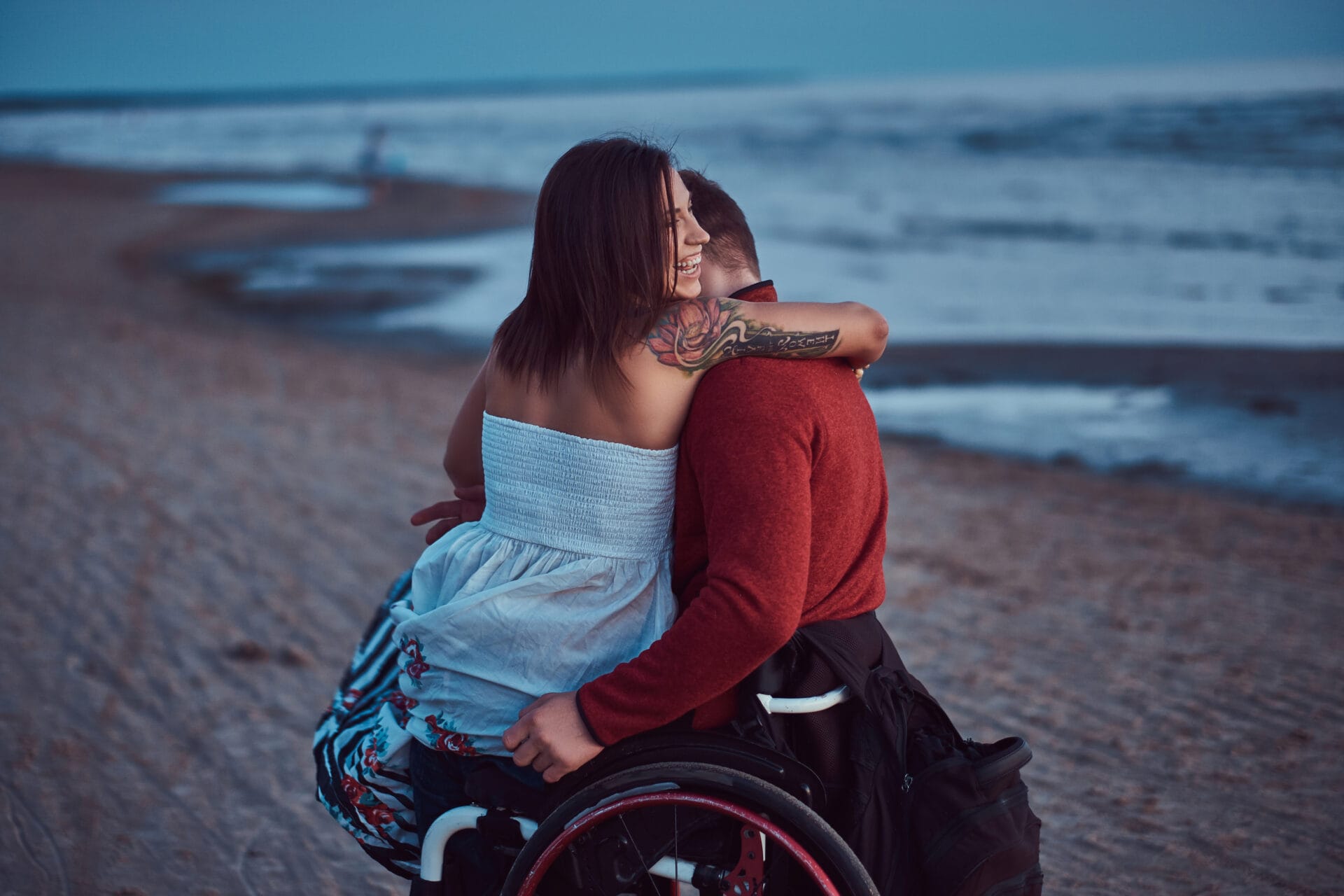
The idea that the persons with disabilities can't love, want or living loving relationships rewarding is still very popular. Often it is taken for granted that the feelings are attenuated, non-existent or, worse, destined to remain always not reciprocated, especially when the partner is a person normotopica.
These beliefs have no basis in real, but they are born from stereotypes rooted and a limited view of the disabilities.
The disabilityin fact, it's not about the ability to feel emotions, to build links or wanting a relationship. Regards a the condition of the physical, sensory, or cognitivenot the ball affettivto. Yet, the taboo the love continues to be one of the less discussed when talking about inclusion.
The real obstacle is not love
The problem is not to love, or be loved, but to find a person capable of seeing the individual before the disability. A healthy relationship is when you feel recognized, respected and enhancednot when it is perceived as “a problem” or as someone to be pitied.
Many people with disabilities will tell you that the biggest difficulty is not their condition, but the the gaze of othersa look which often reduces the person to the lack of it, ignoring the rest. In this context, thelove may be experienced as something equivalentand, almost as a privilege, instead of cas a law emotional and human.
Love is not compensation
Another misunderstanding is common to confuse thelove with compassion. Love is not sacrifice, tolerance, or heroism. Is choice mutual, balance and freedom.
When a relationship is based on the idea that a person “gives” and the other “receiving,” you are not in front of a bond equal.
To love a person with a disability does not mean “do good”, but sharing your life with someone, with its complexityas happens in every relationship. The disability does not cancel the contribution affective, emotional, and relational that a person can offer.
Change the narrative to change the culture
Talk about love and disability so open and informative it is essential to break these stereotypes. Recognize the right to a loving relationship means to recognize the full humanity of people with disabilities.
L’inclusion does not just pass by ramps and lifts, but also from the opportunity to live the ties, desires and intimacy, without being judged or infantilizzati . Until the love of people with disabilities will be seen as an exception, there will still be a long way to go.
Normalize the love, it just means stop to be amazed.
visit rightforinclusion.en or write to info@rightforinclusion.it