


🎧 Listen to article read by Nicoletta:
What is the accessibility of election and why is it important to
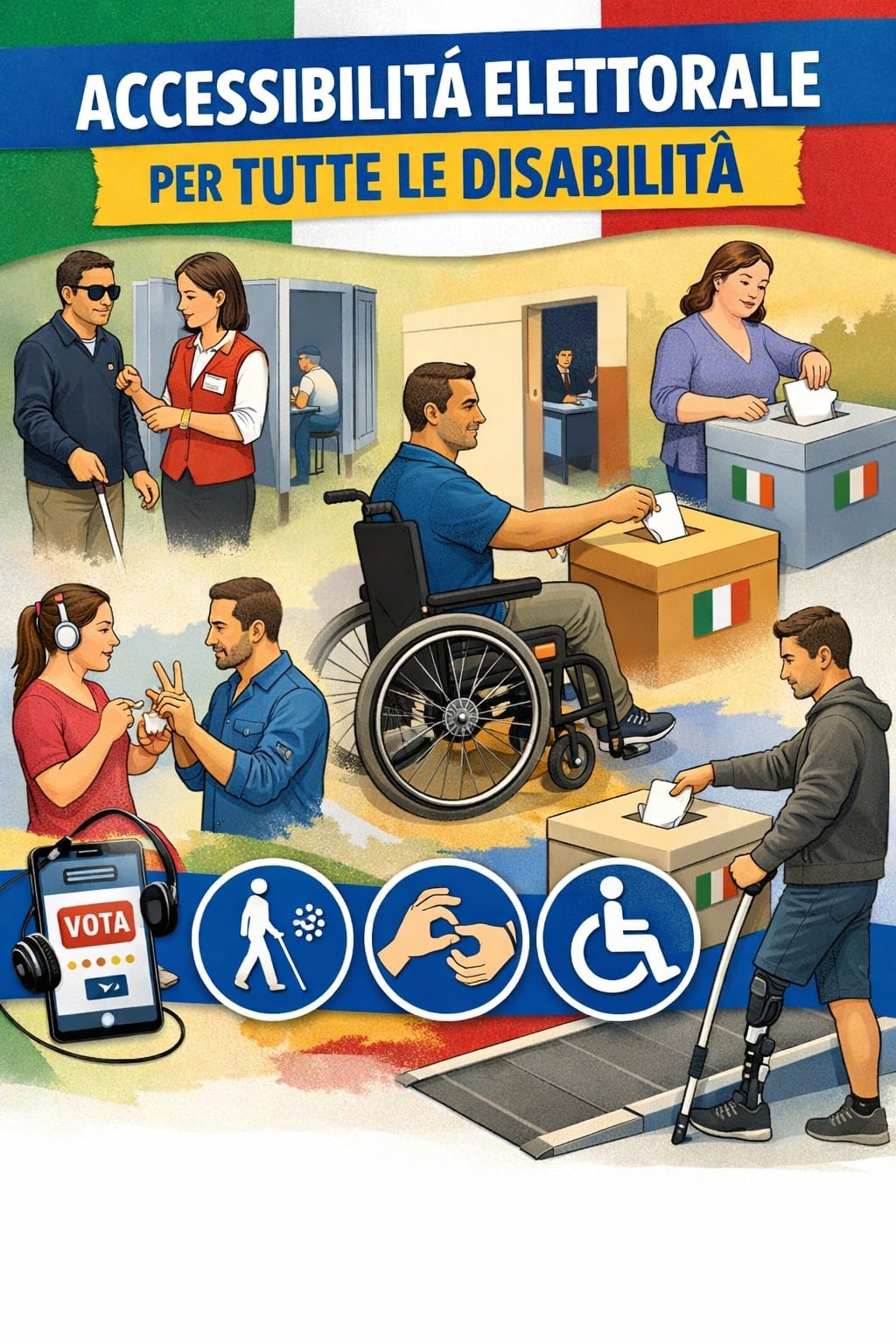
L’accessibility election it represents the possibility for all people, including those with disabilityto exercise thethe right to vote so autonomous, free and conscious.
In 2026, in Italy, the theme is still central: in spite of the the progress of the regulatory, many barriers – physical, social, and cultural – continue to limit the full democratic participation.
Ensure a voting accessible it is not only a technical issue, but a principle of equity and active citizenship.
The Italian legislation on the accessibility of the vote
In Italy, the the right to vote is accessible it is protected by many laws and tools:
- The Italian constitution (art. 48): the vote is personal, free and secret
- Law no. 104/1992: the protection of the rights of persons with disabilities
- Law no. 17/2003: the right to assisted voting
The introduction of the voter with a permanent record in order to avoid certifications repeated
It also adheres to the UN Convention on the rights of persons with disabilities, which requires States to ensure the full participation policy.
The main barriers to voting in 2026
In spite of the regulatory framework, many critical issues remain:
1. Architectural barriers
- Seats are not accessible
- The absence of ramps or lifts
- Spaces internal not adequate for wheelchairs
2. Barriers sensory
- Lack of ballots accessible
- The absence of tools for the blind or visually impaired
- The scarce presence of interpreters LIS
3. Information barriers
- Electoral information is not clear or is not accessible
- Institutional sites are not always conform to the accessibility standard digital
4. Cultural barriers
- Underestimation of the the right to vote of persons with disabilities
- Lack of training of personal the seats
- Tools and solutions for a voting accessible
In 2026, some solutions are already active but not always popular so uniform:
- Assisted voting
The persons with disabilities may be accompanied by a the person of trust.
- Polling stations are accessible
You can request transfer into a seat without barrierand.
- Free transportation to the polling stations
Some Municipalities offer dedicated services in order to facilitate the displacement.
- Assistive technologies (still limited)
- Templates for vote independent
- Media for the blind
What is conspicuously lacking in 2026
Despite the improvements, Italy is still far from a system fully inclusive.
The main criticality:
- The lack of consistency between the Common
- The absence of electronic voting accessible
- Limited use of digital technologies inclusive
- Little information on the electoral rights
Need a change of approach: fromadaptation to the inclusion designed from the start.
Accessibility election and inclusion: a cultural challenge
L’accessibility election is not just about people with disabilitiesbut the quality of democracy as a whole.
A the electoral system accessible:
- increases participation
- strengthens the representation
- reduces the inequalities
Invest in accessibility means to build a more equitable society.
The role of information and projects, inclusive
In 2026, it is essential to spread the awareness on electoral rights.
Projects such as rightforinclusion.en come right with this lens: inform, raise awareness and promote a culture of inclusion is real.
Useful links
The ministry of the Interior – Elections
Law 104/1992 (the rights of persons with disabilities
The UN convention on the rights of persons with disabilities
Call to action
The accessibility may not be an option.
If you want to contribute to the dissemination of thenformation, rights and inclusion:
Learn more about rightforinclusion.en
Write to: info@rightforinclusion.it
Because a democracy is really such only when everyone can participate.