


🎧 Listen to article read by Nicoletta:
L’inclusion is a fundamental right sanctioned by law and represents a educational challenge and social of great importance. Guarantee equal opportunities to students with disabilities means to create a learning environment that is accessible, equitable and challenging, capable of exploiting the differences, and promote the participation of all.
When the inclusion was not guaranteed: special schools
Until the ‘70s, in Italia, l’the education of pupils with disabilities was separate from that of the other students. There were:
- Special schools for the blind, deaf or have other disabilities specifications;
- Classesintended for children with learning difficulties or behavior;
- Specialized agencies, often operated by religious institutions or associations, which offered a educational path parallel but isolated from the mainstream.
This organization was born with the idea of “protect” students with disabilities, but in reality created segregation and prevented the socialization with peers.
The turning of the years ‘70
With the Law 118/1971 you said for the first time the right of children with disabilities to attend mainstream school.
The revolution then came the Law 517/1977, that abolished the classes and introduced the figure of the teacher supportby opening the way to inclusive model that we know today.
This step marked a sea change: the school was no longer a the place of separation, but it was meeting space, growth and participation for all.
Inclusive education: a right protected by law
In the following years the path to inclusive it is consolidated with key legislation, such as the Law 104/1992, rrecognizes the right to education and social integration of people with disabilities.
Today, the school Italian is called to guarantee:
- the full participation of students with disabilities;
- the removal of architectural barriers and teaching;
- the support of specialized professionals such as teachers and educators.
The role of teachers and school staff
The teachers have a central role in the implementation of the inclusion. The collaboration between teachers curriculum, learning support teachers and families it is essential to build a learning path personalized.
The Individual Educational programme (IEP) is the main instrument that guide the learning, defining objectives, strategies, and tools needed to each student.
Practical advice: discover the The ministerial guidelines on PEI on the website of the Ministry of Education.
Technological tools for the inclusive learning
The new technologies I am a fundamental support to to encourage the active participation of students with disabilities. Among the most popular tools are:
- Speech synthesis Software for students with visual impairments or reading;
- Concept maps digital to facilitate the understanding and organization of information;
- App for augmentative alternative communication (AAC) helpful for people who have difficulty speaking;
- Interactive whiteboards (IWB) that allow a visual learning, and participatory.
- Aids and supports custom
In addition to the digital instrumentsthere are alsouse them practical and materials adapted:
- texts in braille or enlarged letters;
- desks and ergonomic chairs;
- compensatory measures for the writing and the calculation;
- accessible digital books.
Do you want to know what tools are provided for by law? See the portal INAIL dedicated to assistive technology.
Inclusion over the teaching: the value of relationships
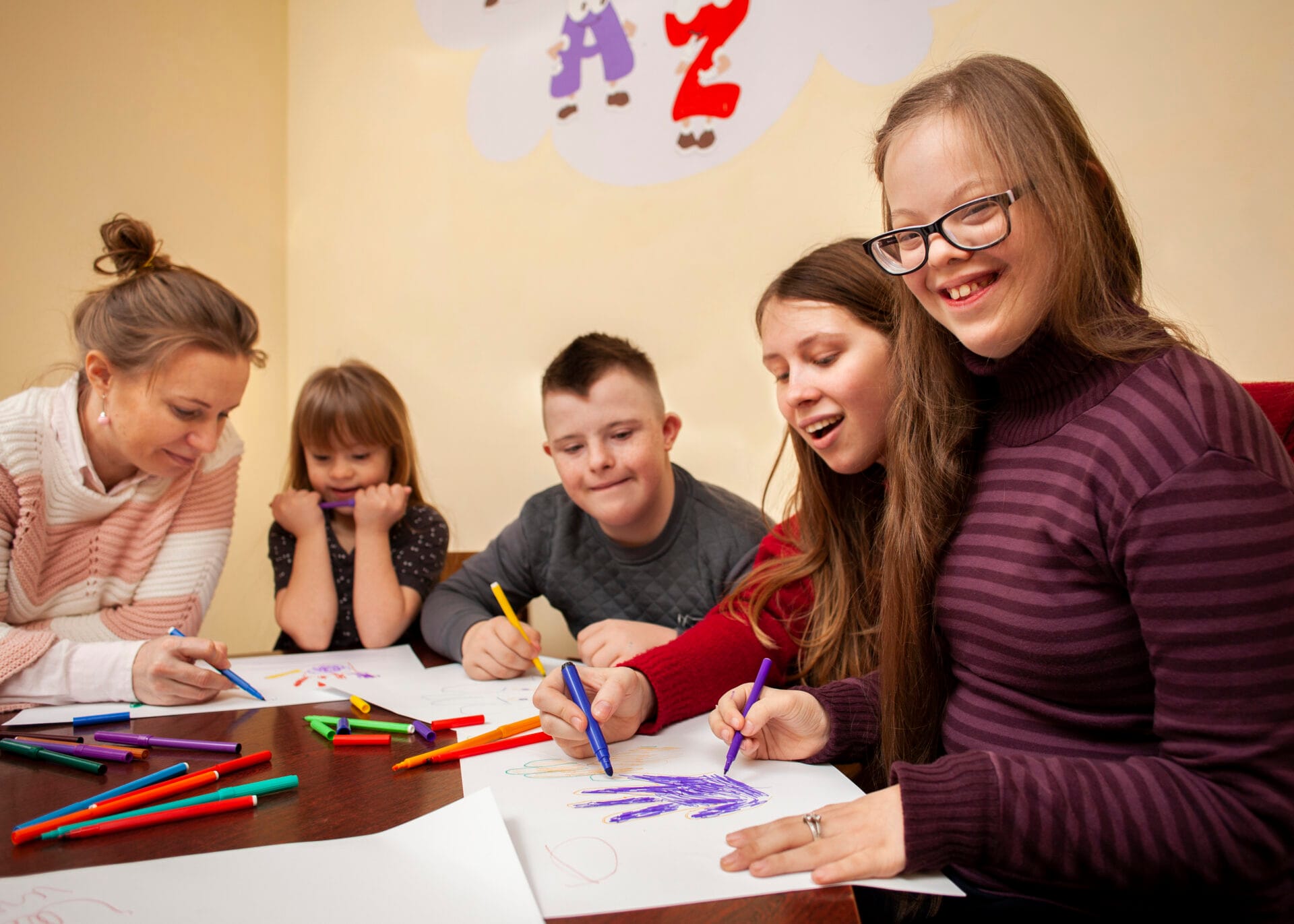
L’inclusion not only about the study, but also the relational dimension. Projects, peer tutoring, cooperative activities and creative workshops foster socialization, reduce the isolation and promote mutual respect.
Challenges and perspectives for the future
In spite of the progress, remain critical issues to be addressed: the lack of teachers, lack of resources and a long time for the assignment of assistive technology. The future prospects focus on a major training of the staff, on the widespread use of the technology inclusive and a stronger between the school, families and the community.
In conclusion we can say that l’inclusion is a process in continuous evolution that requires commitment, innovation and collaboration. Only in this way the school can really become of a a place of growth for allcapable of transform the differences in wealth and opportunity.
Useful resources
- Call to action:
Share this article to spread a culture of inclusion!
Raccontaci la tua esperienza con l’inclusione scolastica on rightforinclusion.en o tramite mail:info@rightforinclusion.it